
Research Week
Research Week at Laurentian University is a week-long celebration of research and learning across all disciplines. The event showcases the diverse research and scholarly contributions of the Laurentian community while fostering collaboration and knowledge sharing. Throughout the week, Maamwizing honours and uplifts Indigenous knowledge and research by hosting events in the Maamwizing space where Indigenous students, scholars, Elders, and community partners can come together to share their work, learn from one another, and celebrate community.
Spring 2026


Meet the Researchers
Chi-miigwetch to the following Laurentian University researchers for sharing valuable insights with us!

Isabelle Innes, Moose Cree First Nation
Graduate Student, Master of Indigenous Relations
Healing in Child & Family Services of Northern Communities
The research topic I want to conduct my Master’s research thesis on are the systemic inequities in child and family social services in a rural Indigenous community. The community I have chosen to do my research on is Moose Cree First Nation, which is my home community. The two organizations I would focus on are Payukotayno: James and Hudson Bay Family Services and CYMS: Child and Youth Milopemahtesewin Services. The systemic inequities in child and family services include higher removal rates of Indigenous children, higher rates of poverty with neglect, lack of funding for resources, lack of culturally-appropriate care, and the historical context and its intergenerational impacts on Indigenous families. For my thesis, I would focus on the lack of funding for culturally-appropriate resources.

Ophelia O’Donnell, Henvey Inlet First Nation
Graduate Student, PhD Rural and Northern Health
Anishinaabe Kweok Conception of Health
Through storytelling sessions, seven Northern Anishinaabe kweok shared their experiences. Rooted in an Anishinaabe paradigm, hermeneutic phenomenology and thematic analysis were used to understand the stories shared during the storytelling sessions. Storytellers described their conceptions of health, their experiences accessing health care, and their dreams for the future of health care. This symposium will focus on the conceptions of health. The conceptions of health described by the storytellers were influenced by the examples of health they had around them, such as observing their parents. Health was defined by cultural factors, including holism. A better understanding of health, as conceptualized by Anishinaabe kweok can help health, wellness and program providers, coordinators and policy makers better address the needs as determined by the population.

Dr. Keri Cheechoo, Iskwew/She//Her, Long Lake #58 First Nation
Associate Professor, School of Indigenous Relations, BISW Program Coordinator
Status Quo Shouldn’t Be Your Legacy: Knowledge Keeping, Lived Experiences, and Treaty Education
This presentation will offer opportunity for participants to learn about the purpose of this project, which is to engage Indigenous Peoples’ knowledge systems, oral histories, knowledges, languages, perspectives, methodologies, laws, protocols, and connections to the land. This project will contrast formal and legal policy with the direct lived experiences of Elders and Knowledge Keepers from Treaty 3, Treaty 5, and Treaty 9 areas. The objectives include gathering living stories from Elders and Knowledge Keepers about intergenerational knowledges pertaining to different Treaty areas in what is known as Ontario, which is in the nation-state Canada, and sharing them in a good way through a Treaty curriculum that informs the next generations about Treaty Areas 3, 5, and 9 so that the knowledge remains. Treaties are storied, that is, their narratives are “living instruments that bind peoples together” (RCAP, 1996, p. 657). This project will contribute to a treaty education curriculum developed with the direct knowledge through a (re)storied historical consciousness provides grounding for First Nation Peoples to recognize the jurisdictions and histories of their relations, past, present, and future.
This event was hosted by Maamwizing Indigenous Research Institute in collaboration with the Laurentian University Research Office, the School of Indigenous Relations and Indigenous Student Affairs. Chii-miigwetch to everyone who came together and made this event a success!


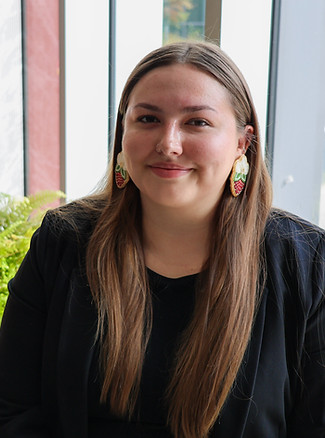
Alicia Williamson, Wiikwemkoong Unceded Territory
Assistant Professor, School of Indigenous Relations
Ethics of Care — Resurgent Research Journey Encounters
This presentation is rooted within the context of my PhD research which focuses on the resurgence of Anishinaabe quillwork within my familial lines. My methodological orientation places my relatives at the center of this work. Anishinaabe scholar, Dr. Celeste Pedri-Spade explains, “[it] is not sufficient that we access information from the past, but that we must honour and celebrate it” (2017, p. 161). This requires careful consideration of the purpose and process of this research journey. I invite participants to contemplate the following questions: Who is your research for? And, what is the research seeking to do? Briefly, I will share a story of rematriation, of coming home, and how this encounter has influenced my approach as an early career researcher.

Amanda Wassegijig-Trudeau, Wiikwemkoong Unceded Territory
Graduate Student, PhD Rural and Northern Health
Re-Igniting the Matriarch and First Nations Childbearing Practices
Background: Birth has become normalized as a medical procedure stemming from the Canada Health Act that continues to be supported by institutional coercion. Such political support has caused First Nation mothers living in rural or remote First Nations communities to lose autonomy in their birth experiences. This forceful approach to a joyous life event has caused negative impacts to mother, infant and First Nation families. These negative impacts have minimal record of economic costs and long term effects to First Nation families. By listening to the experiences of First Nation mothers, families, and community providers it will demonstrate what supports are lacking and why autonomy needs to be given back to First Nation communities.
Research Question and Objectives: The research question of this study is, "What factors improved the birthing experience of First Nation mothers who birthed outside of their community.?” Objectives of this study are to identify recommendations for bringing traditional birthing experiences into urban medical spaces and what supports are needed and where? Methods: This study will be taking a two-eyed seeing approach through storytelling with semi structured interviews and focus groups to better understand the phenomenology of birthing outside of the community. Significance: The findings from this study will provide supporting evidence for the First Nations communities within Canada when applying for funding opportunities. This study can aid health policy makers for policy development and developing culturally safe maternal health care services for Indigenous populations. This study aims to heal past historical research traumas in Indigenous populations and promote Indigenous methodologies. This proposed research aims to support First Nation community-led culturally ground maternal health practices to help restore the autonomy of First Nation birthing experiences.